- Tungsten has the highest melting point of all metals, and most of it goes into cemented carbide tools and wear parts.
- The USGS identifies China as the world's leading producer, consumer and importer of tungsten concentrates, and the country with the largest reserves.
- Canada, the United States and the European Union all list tungsten as a critical mineral, and the EU also lists it as strategic.
Introduction
Tungsten is not a metal most investors think about, but it is in almost every machine shop, mine and drilling rig in the world. Its job is to stay hard and intact under heat and wear that would ruin ordinary steel. That makes it difficult to replace, and it is one reason governments in Canada, the United States and Europe track it closely.
This guide covers what tungsten does, where it comes from, why supply is concentrated, and how it fits into critical mineral policy.
Tungsten is small in volume and large in consequence: when it is missing, cutting tools stop cutting.
What Makes Tungsten Different
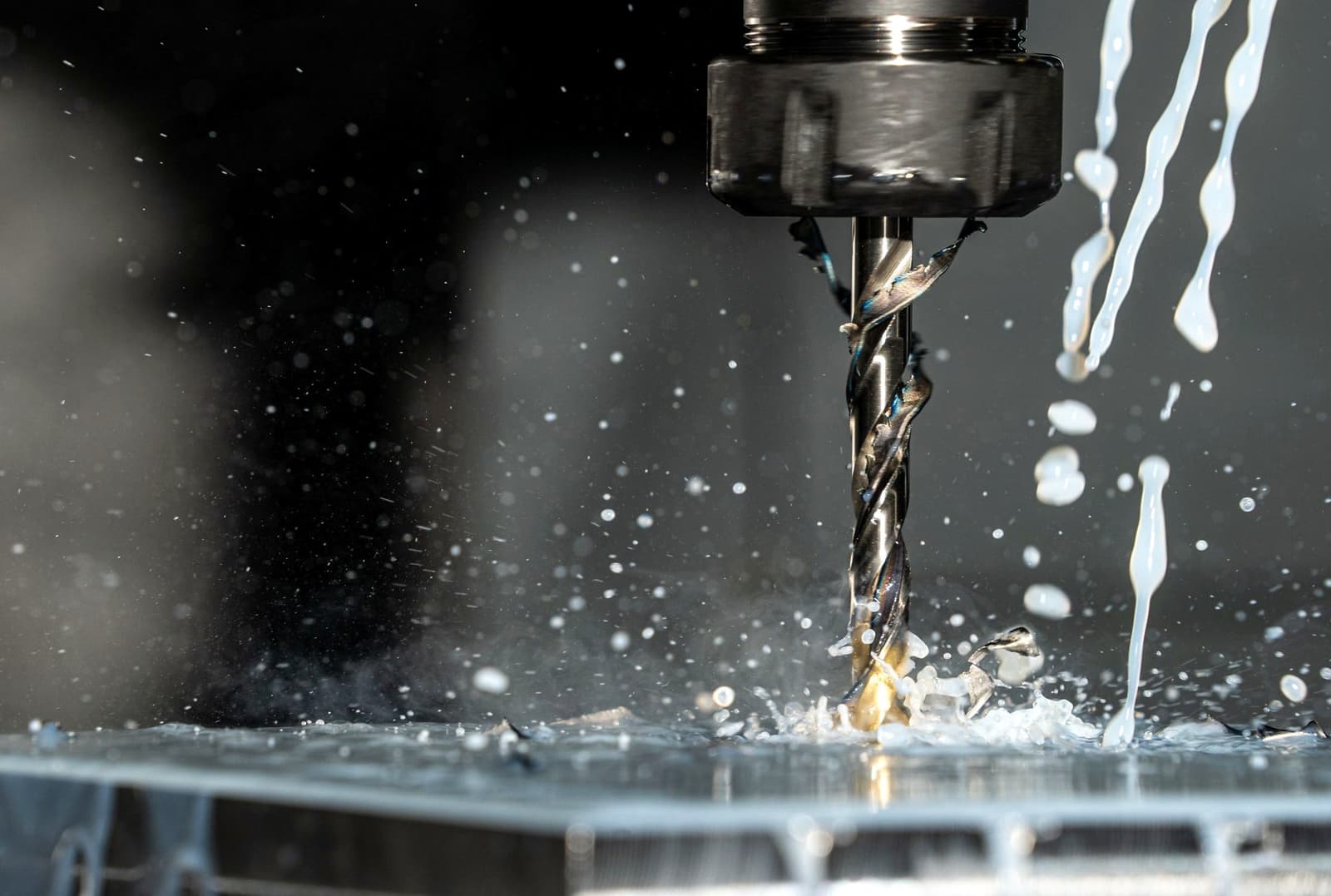
According to the Royal Society of Chemistry, tungsten has the highest melting point of all metals. It is also very dense. Combined with carbon, it forms tungsten carbide, an extremely hard material used for cutting and drilling tools in metalworking, mining and petroleum.
Those properties explain most of its uses. Where a tool tip has to cut hardened steel, or a drill bit has to grind through rock, tungsten carbide holds its edge far longer than steel alone.
Where It Is Used
The USGS Mineral Commodity Summaries describe tungsten's end uses this way:
- Cemented carbides, the largest use: cutting tools and wear-resistant parts for construction, metalworking, mining, and oil and gas drilling.
- Alloys and specialty steels, where small amounts add strength and heat resistance.
- Wire and components: electrodes, filaments, wires and components for electrical, electronic, heating, lighting and welding uses.
- Chemicals, used in a range of industrial processes.
The common thread is industrial activity. Demand is tied to manufacturing, construction, drilling and mining rather than to a single consumer product.
Hard to Replace
The USGS lists possible substitutes for cemented carbides, including carbides based on molybdenum, niobium or titanium, ceramics, cermets and tool steels. In other uses, materials such as molybdenum, lead, hardened steel or newer lighting technology can stand in.
The catch, according to the USGS, is that most substitutes reduce tungsten use rather than eliminate it, and some raise costs or lower performance. For a buyer, that means demand does not fall away quickly when supply gets tight.
Where Supply Comes From
The USGS identifies China as the world's leading producer, consumer and importer of tungsten concentrates, and as the country with the largest tungsten resources and reserves. Other countries mine tungsten, but none on a comparable scale.
The United States is a useful contrast. According to the USGS, it has had no commercial tungsten mine production since 2015 and relies on imports for more than half of its apparent consumption, even though several companies there convert concentrates, oxides and scrap into powders, carbides and chemicals.
Trade policy has added to the concentration risk. The USGS records that at the end of 2024 the United States raised tariffs on several Chinese tungsten products, and that in February 2025 China introduced export controls on selected tungsten items. The same report notes that several projects in Canada and the United States received US Defense Production Act Title III awards. Policy can change quickly in either direction, so these points are best read as context, not as a forecast.
Recycling is an ongoing source of supply. Worn carbide tools and other scrap can be processed back into tungsten products. The USGS withheld recent US recycled quantities to protect company data, so the size of this source is not always visible.
Geology in Brief
The USGS names scheelite, ferberite and hübnerite as the most common tungsten minerals. It describes tungsten ore as coming from several types of mineral deposits, including skarns, veins and porphyry deposits.
Different minerals and deposit types process differently. For a junior tungsten explorer, metallurgy is as important as grade, and a separate guide covers metallurgical recovery.
On the Critical Lists
- Canada. Tungsten is on Canada's critical minerals list, which identifies 34 minerals and metals and was last updated in 2024.
- United States. Tungsten is on the Final 2025 List of Critical Minerals published by the USGS in the Federal Register on November 7, 2025.
- European Union. Tungsten is listed as both a strategic and a critical raw material under the EU's Critical Raw Materials Act, Regulation (EU) 2024/1252.
Each government uses its own method to build its list. Our guide to how governments define critical minerals explains the differences. A place on a list can bring policy attention and funding programs, but it does not make any particular project economic.
Reading Tungsten Headlines
Because supply is concentrated, tungsten news is often about policy rather than geology: tariffs, export controls, stockpiles and government funding. Three questions help:
- Is it in force or proposed? A measure that has been announced, proposed or passed can have very different effects.
- When was it dated? Trade measures change, and older headlines get recirculated.
- Who does it apply to? A government award to one project, or a measure on one product, does not automatically reach every company working on the same metal.
The primary source, a government notice or the company's own filing, answers these questions better than a summary.
What to Check in a Tungsten Junior
- Deposit type and mineral. Skarn, vein or porphyry, and which tungsten minerals are present. These affect mining and processing.
- How grade is stated. Check whether grades are given as tungsten metal or as an oxide, and convert before comparing.
- Metallurgical testwork. Whether test results show a saleable concentrate and at what recovery.
- Resource category and study stage. Inferred resources and early studies carry more uncertainty, as with any metal.
- Funding sources. Whether government programs are involved, on what terms, and whether they are committed or proposed.
- Market access. Who would buy the concentrate and where it would be processed.
Tungsten belongs to a group of smaller critical metals alongside tin and the rare earths, where supply concentration matters as much as demand. Read each company's filings on SEDAR+ and speak to your own adviser before making any investment decision.
Frequently asked questions
- Mineral Commodity Summaries 2026: Tungsten, U.S. Geological Survey, 2026-02-06
- Tungsten deposits of the United States (data release), U.S. Geological Survey, 2020-06-01
- Tungsten: element information, properties and uses, Royal Society of Chemistry, 2011-01-01. Page text is copyright 1999 to 2011; no day is stated
- Critical minerals: an opportunity for Canada, Government of Canada, 2026-06-30. Date is the page's last modified date
- Final 2025 List of Critical Minerals, U.S. Geological Survey, Federal Register, 2025-11-07
- Regulation (EU) 2024/1252 establishing a framework for ensuring a secure and sustainable supply of critical raw materials, European Union (EUR-Lex), 2024-04-11
This article is published by Bellmare Capital, a brand operated by Apollo Shareholder Relations, for information and education only. It is not investment advice, a recommendation, or an offer or solicitation to buy or sell any security. Bellmare Capital is not a registered investment adviser or dealer, and this is not independent research.
Apollo Shareholder Relations provides paid investor relations, marketing and communications services to public companies, including companies in the sectors Bellmare Capital writes about, and may be compensated in cash or securities. Apollo, its principals, employees and contractors may hold securities of companies discussed and may buy or sell them at any time. Where an article covers a company that pays Apollo, it is labelled Sponsored at the top with the compensation and holdings.
Information comes from public filings and other sources believed to be reliable, but its accuracy and completeness are not guaranteed, and it may be out of date. Small cap and junior resource companies are speculative and volatile, and investors can lose their entire investment. Bellmare Capital and Apollo Shareholder Relations accept no liability for any loss arising from use of this content. Read each company's own filings on SEDAR+ and consult a registered adviser before acting.
Get the next one by email.