- Steelmaking uses most of the world's manganese. It removes oxygen and sulphur from iron and makes steel stronger and less brittle, and the USGS says it has no satisfactory substitute in its major uses.
- Battery makers use high-purity manganese sulfate in some lithium-ion cathodes. Making it is a separate, multi-step chemical business, concentrated mainly in China.
- According to the USGS 2026 summary, South Africa is the largest producer of manganese ore, and Australia and South Africa hold the largest reserves.
Introduction
Manganese rarely gets attention outside the steel industry, yet modern steelmaking cannot do without it. More recently it has gained a second identity as a battery material, because a refined form of manganese goes into some lithium-ion cathodes.
Those two markets are very different. Steel uses large volumes of ordinary manganese ore and alloys. Batteries use small volumes of a highly refined chemical. Understanding the difference is the key to reading a manganese company.
Manganese for steel and manganese for batteries start in the same ground and end up as very different products.
Steel's Quiet Partner
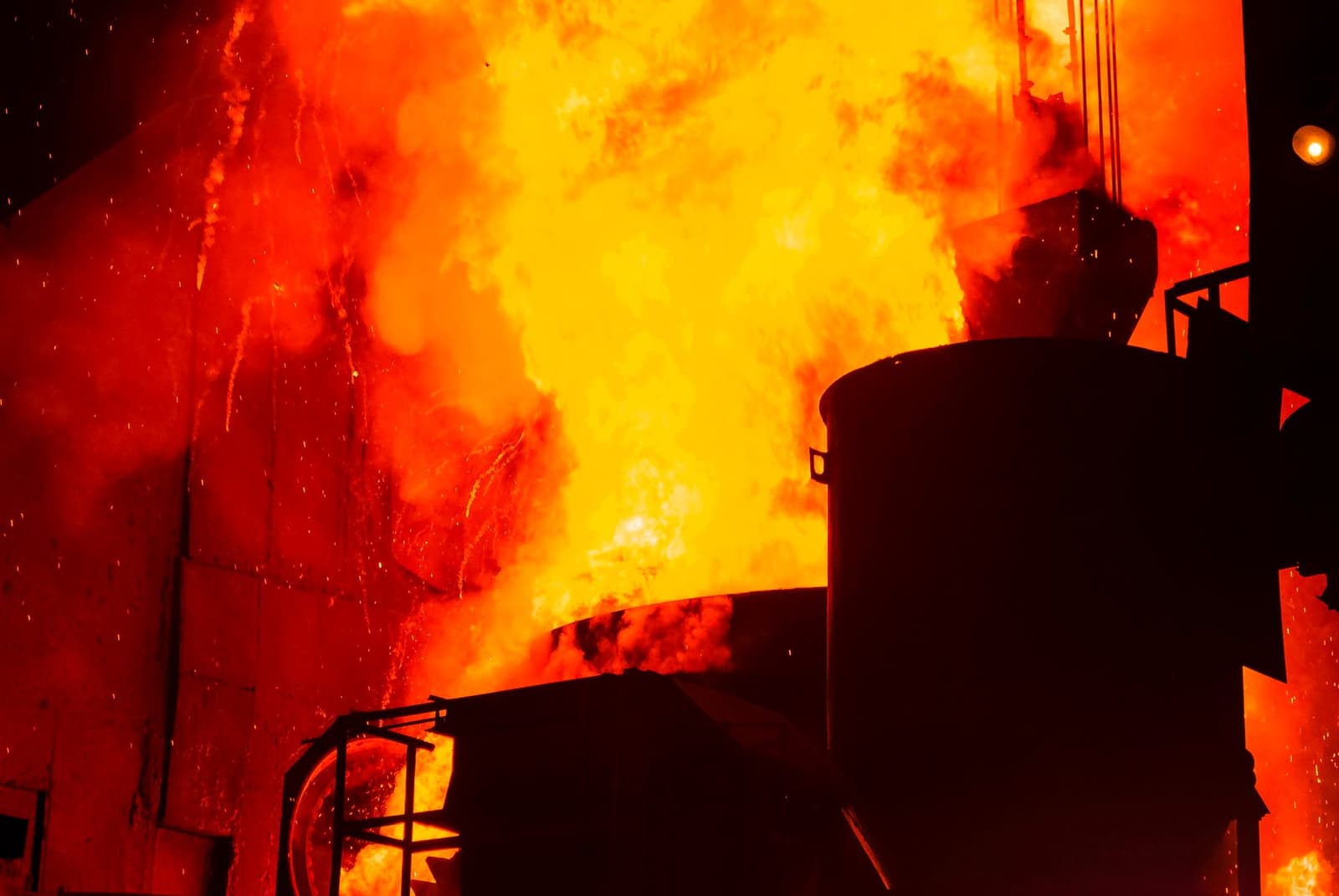
A 2014 USGS fact sheet calls manganese essential and irreplaceable in steelmaking. It does two jobs:
- Cleaning. Manganese removes oxygen and sulphur when iron ore is converted into iron.
- Alloying. Added to steel, it makes the metal stronger and less brittle.
Steel uses only a small amount per tonne, but steel is made in enormous quantities, so steelmaking accounts for most manganese demand. The USGS 2026 summary states that steel demand drives manganese consumption and that manganese has no satisfactory substitute in its major applications.
Steelmakers usually buy manganese as alloys made from the ore, such as ferromanganese and silicomanganese, rather than as pure metal. Both appear in the USGS summary.
This link to steel shapes the market. Demand for most manganese follows steel production, which follows construction, manufacturing and infrastructure. A manganese producer selling into steel is exposed to the same cycle as its customers.
Other Uses
The USGS fact sheet lists a range of other uses:
- alloys with aluminum and copper;
- soft ferrites in electronics;
- micronutrients in fertilizer and animal feed;
- water treatment chemicals;
- colourants for bricks, glass, paints and tiles;
- battery cathodes, including the dry-cell batteries noted in the 2026 summary.
The Battery Connection
According to a September 2025 briefing by the US International Trade Commission (USITC), manganese is an input to the cathodes of lithium-ion batteries. Small amounts reduce flammability and increase energy capacity. It is used in:
- nickel-manganese-cobalt (NMC) cathodes, which the USITC says most US and European electric vehicle makers use; and
- lithium manganese iron phosphate (LMFP), a version of lithium iron phosphate with manganese added.
Battery makers do not use ore. They use high-purity manganese sulfate monohydrate, often shortened to HPMSM. The USITC describes a multi-step process to make it: concentrating the ore, leaching and purifying it, producing manganese metal by electrowinning, then dissolving and crystallizing that metal into the sulfate.
The steps matter. Each one adds cost and needs its own expertise, and battery makers set strict limits on impurities. A deposit that suits steel may or may not suit battery use, and proving that it does takes test work at each stage.
Supply of this product is narrow. The USITC reports that China accounted for the large majority of HPMSM output in 2024, with the remainder from a small number of plants in Belgium and Japan, and that few plants outside China have the expertise to make it. It also describes battery use as a small but growing part of manganese demand, with steel still the main use.
Where Manganese Comes From
According to the USGS 2026 summary, using estimates for 2025:
- South Africa is the largest producer of manganese ore, followed by Gabon, Ghana and Australia. Brazil, China, India and Côte d'Ivoire also produce notable amounts.
- Australia and South Africa hold the largest reserves, followed by Brazil and China.
- The United States has had no mine production of high-grade manganese ore since 1970 and relies entirely on imports.
The 2014 fact sheet explains the geology. Most manganese ore occurs in extensive sedimentary layers that formed in ancient oceans when changes in ocean chemistry caused manganese to settle on the seabed. The fact sheet says ores typically contain 25 to 45% manganese, mostly as oxide, hydroxide and carbonate minerals.
The same fact sheet notes that potato-sized nodules rich in manganese and iron cover much of the deep seabed, and that they could become a major source if mining them proves technically, economically and legally feasible. That question remains open.
Why Governments Care
Two facts explain why manganese appears on government lists. The USGS says there is no satisfactory substitute in its major uses, and production of both ore and refined products is concentrated in a few countries. The USGS fact sheet notes that the US considers manganese one of its most critical mineral commodities because the global industry is dominated by just a few nations. The USITC identifies the concentration of high-purity manganese processing in China as a supply-chain risk, and reports that China also produces most of the world's refined manganese metal.
The Government of Canada includes manganese on its critical minerals list. Inclusion on a list does not by itself make any project viable.
Reading a Manganese Junior
The first question is which product a company plans to sell:
- Ore or concentrate for steel and alloys. Grade, impurities, tonnage and transport cost matter most. This is a bulk commodity business.
- High-purity manganese for batteries. This adds a chemical plant to a mine. Look for test work showing the company can reach battery-grade specifications, the stage of any pilot work, and whether potential buyers have tested product.
Other points to check:
- Grade in % manganese, and how it compares with the typical range for mined ore.
- Processing route and the recoveries assumed at each step.
- Capital cost of the plant as well as the mine, compared with the company's cash and market value.
- Technical reports filed on SEDAR+ under NI 43-101, which hold the assumptions behind any headline.
Battery demand is often discussed alongside other cathode metals; our notes on nickel and lithium supply chains cover the same chain from different angles.
This note is general information drawn from the dated sources listed. It is not advice and makes no forecasts. Check company filings, and speak to your own adviser before making decisions.
Frequently asked questions
- Mineral Commodity Summaries 2026: Manganese, U.S. Geological Survey, 2026-02-06
- Manganese: It Turns Iron Into Steel (and Does So Much More), Fact Sheet 2014-3087, U.S. Geological Survey, 2014-08-29
- Manganese for EV Batteries (Executive Briefings on Trade), U.S. International Trade Commission, 2025-09-01. Dated September 2025; no day stated
- Canada's critical minerals, Government of Canada, 2026-06-30
This article is published by Bellmare Capital, a brand operated by Apollo Shareholder Relations, for information and education only. It is not investment advice, a recommendation, or an offer or solicitation to buy or sell any security. Bellmare Capital is not a registered investment adviser or dealer, and this is not independent research.
Apollo Shareholder Relations provides paid investor relations, marketing and communications services to public companies, including companies in the sectors Bellmare Capital writes about, and may be compensated in cash or securities. Apollo, its principals, employees and contractors may hold securities of companies discussed and may buy or sell them at any time. Where an article covers a company that pays Apollo, it is labelled Sponsored at the top with the compensation and holdings.
Information comes from public filings and other sources believed to be reliable, but its accuracy and completeness are not guaranteed, and it may be out of date. Small cap and junior resource companies are speculative and volatile, and investors can lose their entire investment. Bellmare Capital and Apollo Shareholder Relations accept no liability for any loss arising from use of this content. Read each company's own filings on SEDAR+ and consult a registered adviser before acting.
Get the next one by email.