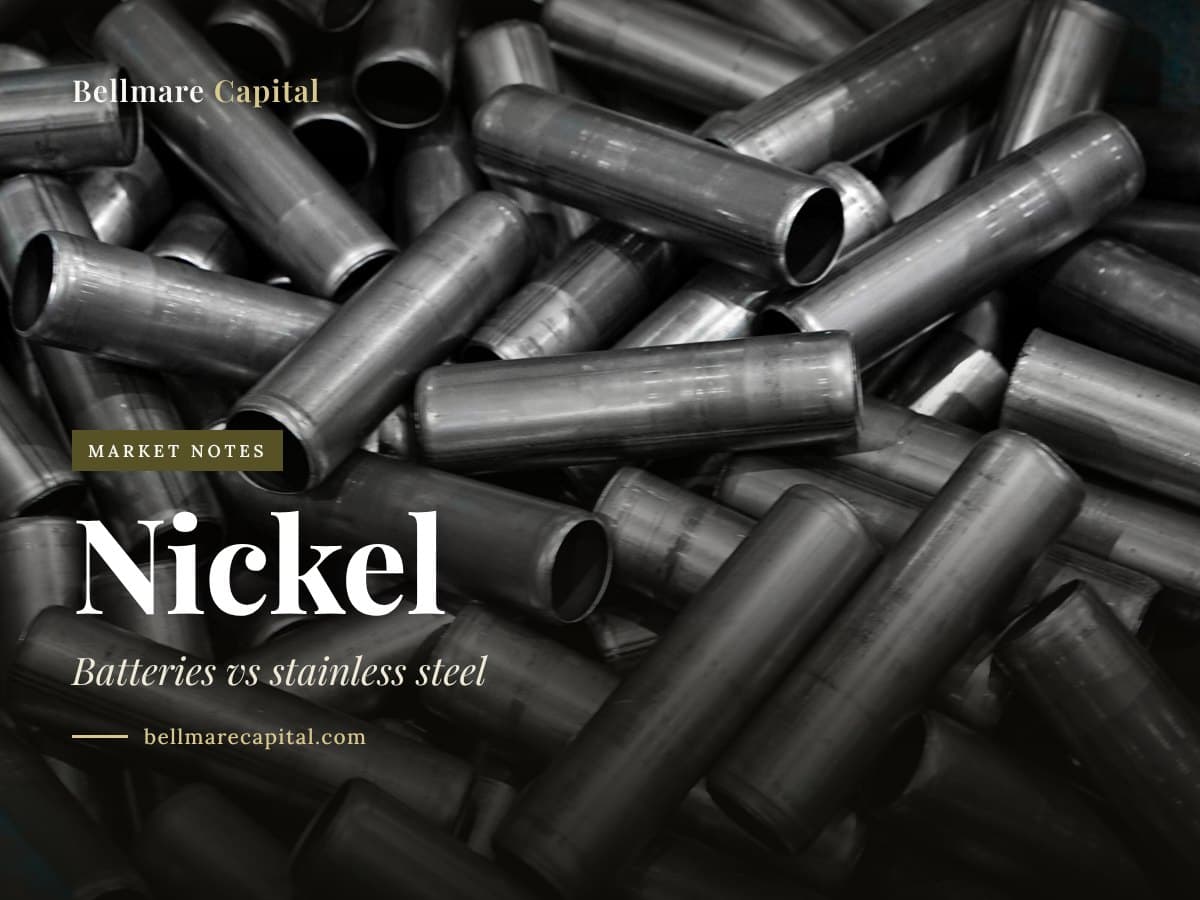
- Roughly two-thirds of nickel demand is still stainless steel.
- Battery demand, while smaller, is the fastest-growing segment.
- The two end markets require different nickel chemical forms (Class 1 vs Class 2), which has split the market into two pricing regimes.
What are the two main nickel markets?
Stainless steel is still the largest single use of nickel, accounting for the majority of annual demand. Lithium-ion batteries are the fastest-growing use. The two markets need different chemical forms of nickel and have at times priced very differently.
Class 1 vs Class 2 nickel
Class 1 nickel is high-purity nickel (98 percent or above), suitable for direct use in batteries and other chemical applications. Class 2 nickel includes ferronickel and nickel pig iron and is used primarily in stainless steel. Battery makers need Class 1 product or its chemical equivalent.
Indonesia’s role
Indonesia has become a dominant producer of nickel through laterite mining and the build-out of high pressure acid leach (HPAL) processing capacity. Indonesian supply has been a major source of new Class 1-equivalent nickel for the battery market.
Stainless steel demand
Stainless steel demand is tied to construction, manufacturing, and durable goods cycles. China is the largest single consumer of stainless steel by a wide margin. Demand here is more cyclical than battery demand.
Battery demand outlook
Battery demand for nickel is driven primarily by high-nickel cathode chemistries (NCM 622, 811, NCA). Battery makers continue to refine cathode chemistries, and the nickel content per kilowatt hour can shift over time.
| End market | Share of demand |
|---|---|
| Stainless steel | Approximately 65 percent |
| Batteries | 10 to 15 percent and rising |
| Alloys, plating, and other | Approximately 20 to 25 percent |
Demand splits and product class definitions follow public-domain analysis by the International Nickel Study Group, the US Geological Survey, and Natural Resources Canada.
Frequently asked questions
Demand splits and product class definitions follow public-domain analysis by the International Nickel Study Group, the US Geological Survey, and Natural Resources Canada.
This article is published by Bellmare Capital, a brand operated by Apollo Shareholder Relations, for information and education only. It is not investment advice, a recommendation, or an offer or solicitation to buy or sell any security. Bellmare Capital is not a registered investment adviser or dealer, and this is not independent research.
Apollo Shareholder Relations provides paid investor relations, marketing and communications services to public companies, including companies in the sectors Bellmare Capital writes about, and may be compensated in cash or securities. Apollo, its principals, employees and contractors may hold securities of companies discussed and may buy or sell them at any time. Where an article covers a company that pays Apollo, it is labelled Sponsored at the top with the compensation and holdings.
Information comes from public filings and other sources believed to be reliable, but its accuracy and completeness are not guaranteed, and it may be out of date. Small cap and junior resource companies are speculative and volatile, and investors can lose their entire investment. Bellmare Capital and Apollo Shareholder Relations accept no liability for any loss arising from use of this content. Read each company's own filings on SEDAR+ and consult a registered adviser before acting.
Get the next one by email.