- The Democratic Republic of the Congo supplies the majority of mined cobalt.
- Battery cathode chemistries are gradually reducing cobalt intensity per kilowatt hour.
- ESG concerns around artisanal mining have created premium markets for traceable cobalt.
Why the DRC dominates cobalt mining
The Democratic Republic of the Congo holds the largest known cobalt-bearing copper sulfide deposits and produces the majority of world mine supply. Most DRC cobalt is a byproduct of copper mining, with both industrial-scale and artisanal small-scale mining contributing.
Refining concentration
China has the largest share of cobalt refining capacity. As a result, even non-DRC mined cobalt typically transits Chinese refineries before reaching battery makers. This adds a second layer of concentration to the cobalt supply chain.
Battery chemistry trends
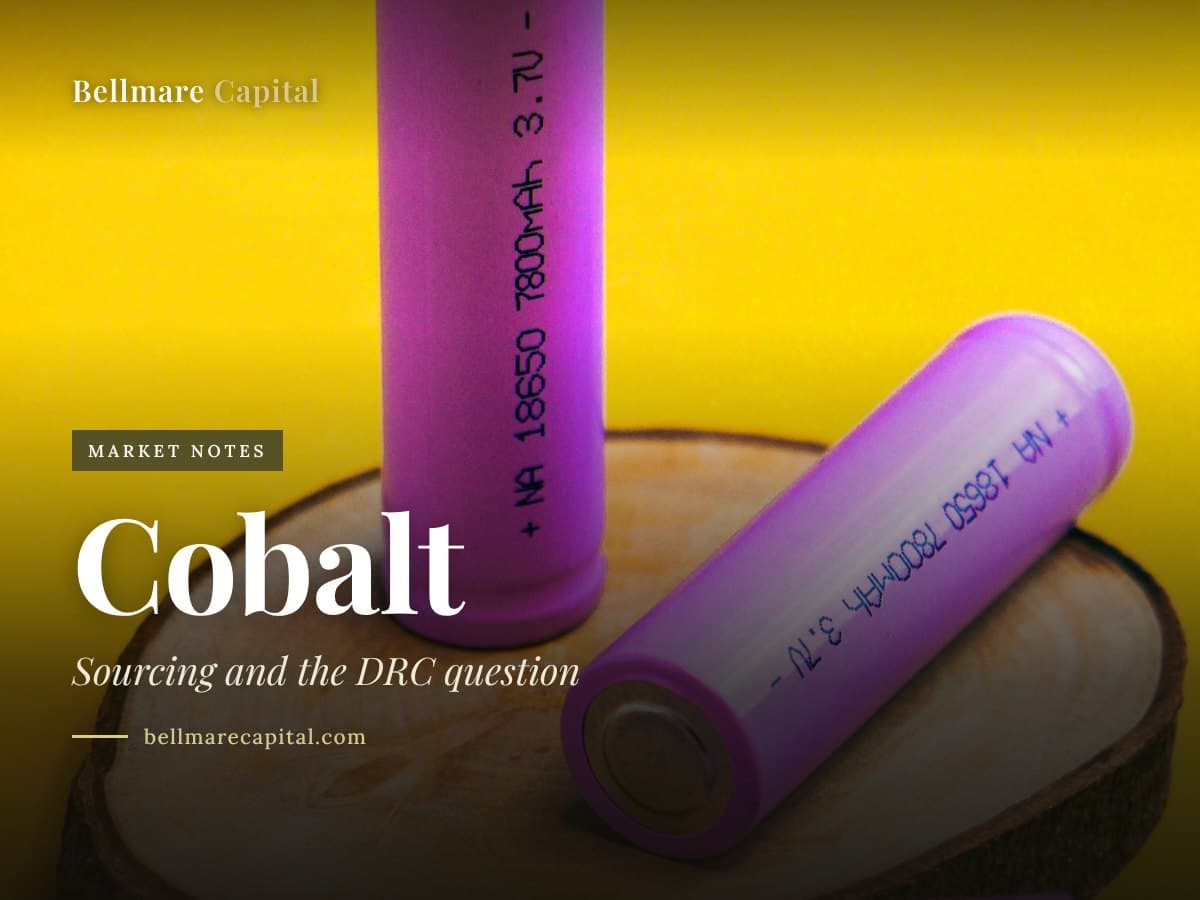
EV cathode chemistries have evolved to reduce cobalt content. Lithium iron phosphate (LFP) cathodes contain no cobalt. High-nickel chemistries (NMC 811, NCA) reduce cobalt per kilowatt hour relative to earlier formulations. These shifts have moderated cobalt demand growth relative to overall battery demand.
ESG and traceability
Artisanal small-scale mining in the DRC has been associated with child labor and unsafe conditions. Battery makers and automakers have responded with traceability programs, certification schemes, and preferential sourcing from industrial mines. This has created a small but growing market for traceable cobalt at a premium.
Investment implications
Non-DRC cobalt projects (in Australia, Canada, the Philippines, and Indonesia) attract strategic interest from auto OEMs and Western governments. Demand growth depends on the chemistry mix as much as on EV unit volumes.
Concentration and chemistry trends are documented by the US Geological Survey, the International Energy Agency, and the Cobalt Institute.
Frequently asked questions
Concentration and chemistry trends are documented by the US Geological Survey, the International Energy Agency, and the Cobalt Institute.
This article is published by Bellmare Capital, a brand operated by Apollo Shareholder Relations, for information and education only. It is not investment advice, a recommendation, or an offer or solicitation to buy or sell any security. Bellmare Capital is not a registered investment adviser or dealer, and this is not independent research.
Apollo Shareholder Relations provides paid investor relations, marketing and communications services to public companies, including companies in the sectors Bellmare Capital writes about, and may be compensated in cash or securities. Apollo, its principals, employees and contractors may hold securities of companies discussed and may buy or sell them at any time. Where an article covers a company that pays Apollo, it is labelled Sponsored at the top with the compensation and holdings.
Information comes from public filings and other sources believed to be reliable, but its accuracy and completeness are not guaranteed, and it may be out of date. Small cap and junior resource companies are speculative and volatile, and investors can lose their entire investment. Bellmare Capital and Apollo Shareholder Relations accept no liability for any loss arising from use of this content. Read each company's own filings on SEDAR+ and consult a registered adviser before acting.
Get the next one by email.