- Antimony's main uses are flame retardants, lead-acid battery alloys, ammunition, ceramics and glass. Substitutes exist for some uses but usually mean reformulating a product.
- China and Russia are the largest mine producers, according to the USGS, and China's export restrictions from 2024 showed how quickly supply can tighten.
- Antimony is on both Canada's critical minerals list and the US list. That brings policy attention, but it does not make any single project economic.
Introduction
Antimony is not a metal most investors think about. It trades in a small market, has no major futures contract, and is often a minor component of the products it goes into. Yet it shows up on almost every government critical minerals list, and it became a headline commodity when export restrictions tightened supply in 2024.
This note explains what antimony is used for, where it comes from, why its supply is a concern, and what the critical mineral label does and does not mean for companies exploring for it.
Antimony is a small market where a few suppliers matter a great deal.
What Antimony Does
According to the U.S. Geological Survey (USGS), antimony's uses fall into a few groups:
- Flame retardants. The largest use. Antimony trioxide is combined with bromine- or chlorine-based compounds to make materials more resistant to fire.
- Lead-acid batteries. Antimony is alloyed with lead in battery grids to improve strength and corrosion resistance. The USGS has described batteries as the largest use of metallurgical antimony.
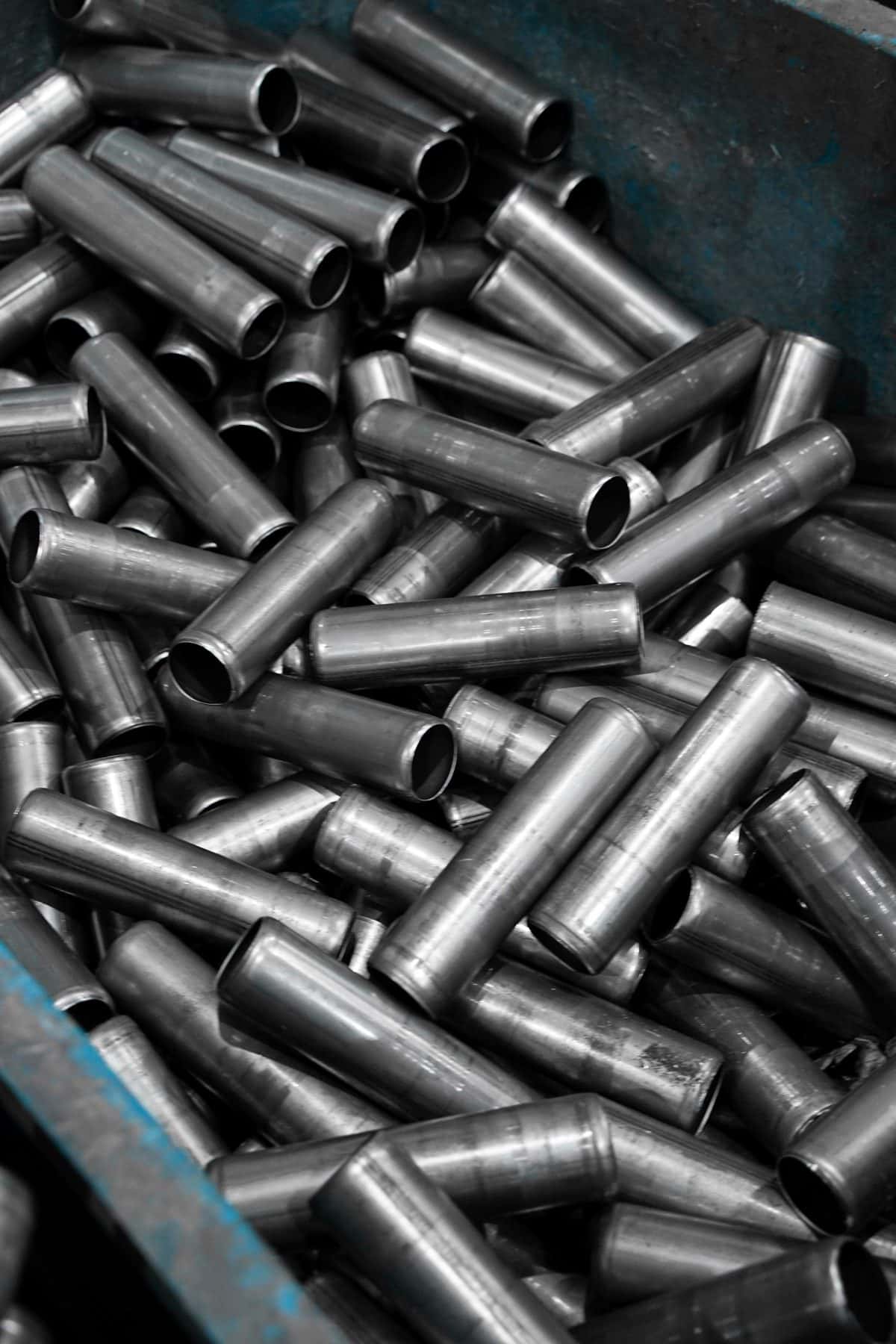
- Ammunition and defence. Antimony sulphide is used in primers, detonators and tracers, and antimony hardens the lead in bullets. This is a large part of why defence planners care about supply.
- Glass, ceramics and other products. Antimony is used in glassmaking, ceramics, rubber and some pigments.
Substitutes exist for some of these. The USGS lists organic flame-retardant compounds and hydrated aluminum oxide as alternatives in flame retardants, and several other metals for battery alloys and pigments. Substitution usually means reformulating a product, which takes time and money, so short-term demand is not very sensitive to price.
Where It Comes From
The main ore mineral is stibnite, an antimony sulphide. A USGS review of antimony resources describes simple quartz-stibnite veins and replacement deposits as the source of most mine production. Some of these form on the edges of orogenic gold systems, so antimony and gold often occur together.
That relationship cuts both ways. The same USGS review notes that gold is an important joint product with antimony, but that gold-antimony veins are commonly mined only for their gold. High antimony content can also complicate gold processing, because it interferes with cyanide leaching. The USGS notes that high-antimony gold ore may even be stockpiled rather than processed. For an explorer, an antimony-rich gold deposit can be an opportunity or a metallurgical problem, depending on the plant, the testwork and whether there is a buyer for an antimony product.
Supply also comes from two other routes: recovery as a by-product of some base metal refining, and recycling of scrap, which the USGS describes as a major source. By-product supply depends on the main metal. How much antimony a refinery recovers depends mainly on how much of its main metal it processes, not on the antimony price.
A Concentrated Supply
According to the USGS 2026 summary, China and Russia are the largest mine producers of antimony, followed by Tajikistan, Bolivia and Burma.
That concentration became a market event in 2024. According to the USGS, prices rose sharply after China restricted antimony exports, and in December 2024 China banned antimony exports to the United States. In November 2025 China suspended that ban for a year while keeping its export licensing controls, a reminder that export policy can change in either direction. The point for investors is structural: when a few countries supply most of a small market, one government's policy decisions can move availability and price faster than new mines can respond.
The history of the United States shows how thin non-Chinese supply has been. According to the USGS, domestic antimony mining largely ended in 2001, when a silver mine in Idaho stopped recovering it as a by-product. The USGS reports that mine production restarted in 2025, and it says US resources are mainly in Alaska, Idaho, Montana and Nevada. Its 2026 summary shows no mine production in Canada, although it lists Canadian reserves.
New supply takes time. A deposit has to be found, drilled, studied, permitted and built, and the processing route has to work for the specific ore. That gap between a policy goal and a producing mine is the main thing to keep in mind when reading antimony news.
On the Critical List
Antimony is on Canada's critical minerals list, first published in 2021 and updated in 2024. The Government of Canada says the list now includes 34 minerals and metals. In the United States, antimony is on the final 2025 List of Critical Minerals published by the Department of the Interior through the USGS, which the USGS describes as used in lead-acid batteries and flame retardants.
A place on these lists signals that governments see supply risk and strategic importance. It can make projects eligible for certain programs, and it draws attention to the commodity. We explain how governments build these lists in our guide to critical minerals lists.
The label does not make a deposit economic. A small antimony project still needs grade, tonnage, workable metallurgy, a buyer for its concentrate, permits and financing, like any other mine. In a small market, a single new producer can also change the supply picture, which affects the prices any project can expect.
What to Look For in an Antimony Story
- The deposit type. Is antimony the main target, or a by-product in a gold system? The economics and the risks are different.
- Metallurgy. Whether testwork shows a saleable antimony concentrate, and whether antimony affects gold recovery.
- The market route. Who would buy and process the concentrate, and on what terms.
- Resource disclosure. Any resource should be reported under NI 43-101 with the grade of each metal shown, not only a combined equivalent grade.
- Policy claims. A reference to the critical minerals list or a government program is context, not evidence about the deposit.
- Prices. Antimony is thinly traded and price data is less transparent than for major metals. Be cautious with any study or presentation that assumes recent peak prices will last.
Read the company's filings on SEDAR+ and, before acting, speak to your own adviser.
Frequently asked questions
- China halts ban on gallium, germanium, antimony exports to US, but controls remain, Engineering News (Creamer Media), 2025-11-10
- Mineral Commodity Summaries 2026: Antimony, U.S. Geological Survey, 2026-02-06
- Antimony, Chapter C of Critical Mineral Resources of the United States (Professional Paper 1802-C), U.S. Geological Survey, 2017-12-19
- Critical minerals: an opportunity for Canada, Government of Canada, 2026-06-30
- Interior Department releases final 2025 List of Critical Minerals, U.S. Geological Survey, 2025-11-14
This article is published by Bellmare Capital, a brand operated by Apollo Shareholder Relations, for information and education only. It is not investment advice, a recommendation, or an offer or solicitation to buy or sell any security. Bellmare Capital is not a registered investment adviser or dealer, and this is not independent research.
Apollo Shareholder Relations provides paid investor relations, marketing and communications services to public companies, including companies in the sectors Bellmare Capital writes about, and may be compensated in cash or securities. Apollo, its principals, employees and contractors may hold securities of companies discussed and may buy or sell them at any time. Where an article covers a company that pays Apollo, it is labelled Sponsored at the top with the compensation and holdings.
Information comes from public filings and other sources believed to be reliable, but its accuracy and completeness are not guaranteed, and it may be out of date. Small cap and junior resource companies are speculative and volatile, and investors can lose their entire investment. Bellmare Capital and Apollo Shareholder Relations accept no liability for any loss arising from use of this content. Read each company's own filings on SEDAR+ and consult a registered adviser before acting.
Get the next one by email.