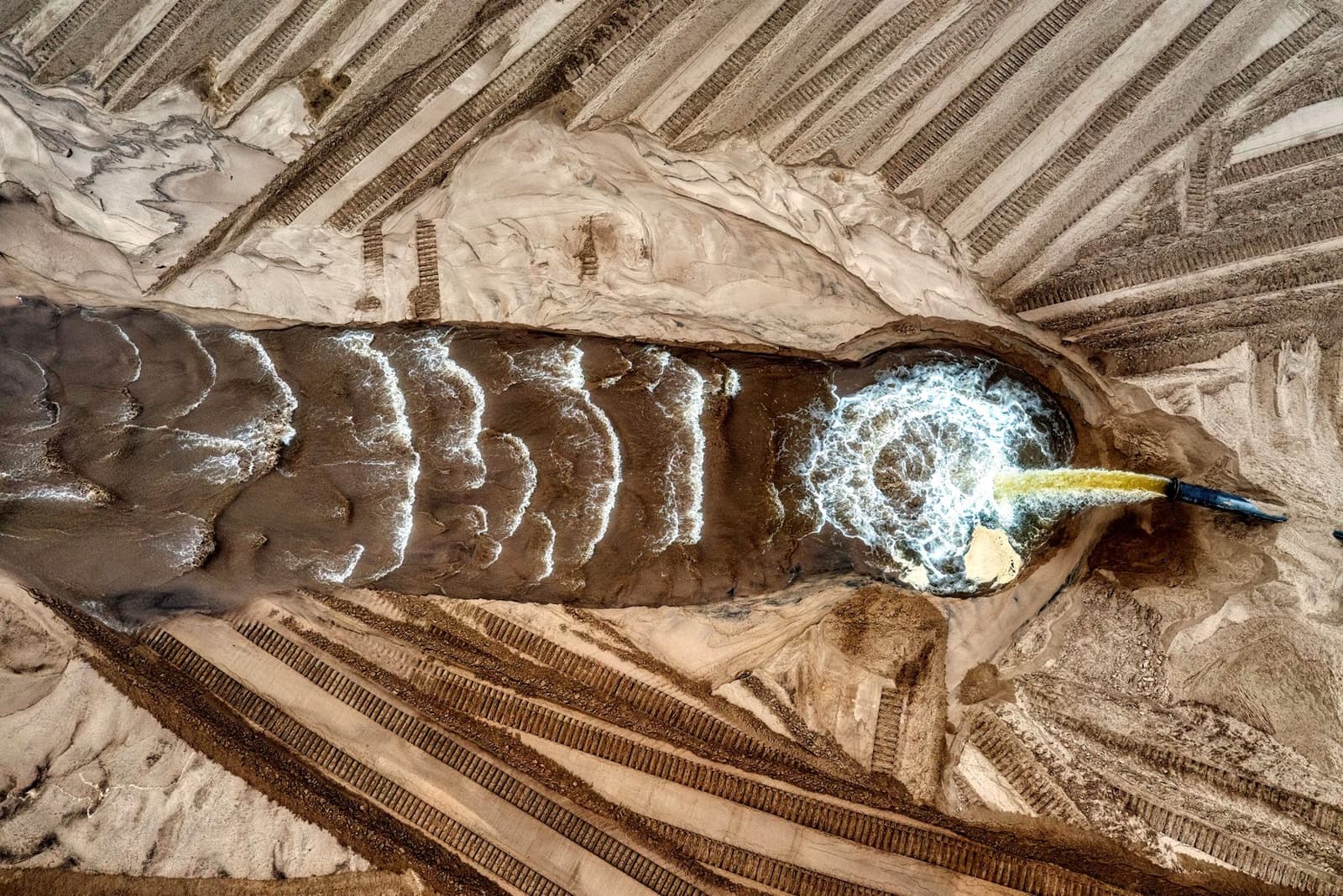
- Tailings are the finely ground rock and process water left after the valuable minerals are removed. Most of what a mill processes becomes tailings.
- They are stored behind engineered embankments, as filtered dry stacks, or returned underground, and each choice changes risk and cost.
- The Global Industry Standard on Tailings Management, published in August 2020, and provincial rules such as British Columbia's mines code set the expectations investors can check against.
Introduction
A mine is built to recover a small amount of valuable mineral from a large amount of rock. Once the mill has done its work, the rest has to go somewhere. That leftover material is tailings, and for most mines it is the largest volume of waste they will ever manage.
Tailings rarely make headlines until something goes wrong. For an investor, they are worth understanding long before that, because how a company plans to store them shapes its costs, its permits and its relationship with the people who live nearby.
A mine's tailings plan is a permanent decision. The facility stays long after the mine closes.
What Tailings Are
To free valuable minerals, a mill crushes ore and grinds it fine, often to the texture of sand or flour, then separates out the minerals it wants. Everything else leaves the plant as tailings: fine rock particles mixed with water and small amounts of the chemicals used in processing.
At a typical metal mine, the valuable product is a small fraction of the ore, so most of what goes through the mill comes out as tailings. In the plant, tailings usually leave as a slurry that can be pumped through pipelines.
Tailings differ from waste rock, which is rock dug out to reach the ore and never processed. Both need managing, but tailings are finer, wetter and usually the harder of the two to store safely.
How Tailings Are Stored
Conventional tailings storage facilities. The traditional approach pumps slurry into an area enclosed by an engineered embankment, often called a tailings dam. Solids settle, and water collects on top, where it can be recycled to the mill. Embankments are usually raised in stages as the mine runs, and the design of those raises matters to long-term stability.
Filtered tailings, or dry stacks. Here most of the water is removed first. British Columbia's code guidance refers to dewatering equipment such as thickeners and filter presses, and to dewatered tailings handled by dry methods such as trucks or conveyors. The result is placed and compacted in a stack instead of being held as a slurry behind a dam. Removing the water reduces the volume of free water that could escape, but filtration adds equipment and operating cost, and not every site or tonnage suits it.
Backfill and in-pit storage. Some mines return part of their tailings underground as backfill, sometimes mixed with cement, or place them in a mined-out pit.
Many mines combine methods. The choice depends on climate, terrain, the amount of tailings, water supply, the chemistry of the rock and cost.
The Global Industry Standard
The Global Industry Standard on Tailings Management was published in August 2020. According to the International Council on Mining and Metals (ICMM), it was developed after a 2019 tailings facility failure in Brazil, through a process convened by the ICMM, the UN Environment Programme and the Principles for Responsible Investment.
The standard has 77 requirements covering social, environmental, local economic and technical matters, with a goal of zero harm to people and the environment. ICMM members committed that all their applicable facilities would conform by August 2025. Many juniors are not ICMM members, but the standard has become a reference point that larger partners, lenders and investors use.
Canadian Rules: The British Columbia Example
In Canada, mines are regulated mainly by the provinces. British Columbia's Health, Safety and Reclamation Code for Mines sets out detailed rules for tailings in Part 10. According to the June 2024 code guidance:
- The mine manager is ultimately responsible for the safety of all tailings facilities and dams on site.
- Each facility must have an Engineer of Record, a professional engineer registered in British Columbia who provides assurance on design, construction, monitoring and closure.
- The manager must designate a qualified person to manage each facility.
- Mines with tailings facilities must set up a tailings review board of outside experts, unless the Chief Inspector grants an exemption. The board gives non-binding advice and files an annual report.
- Requirements include periodic dam safety reviews, an annual facility performance report, an operations, maintenance and surveillance manual, and an emergency preparedness and response plan.
- If the Engineer of Record reports an unresolved safety issue in writing, the manager must report it to the Chief Inspector within 72 hours.
Other provinces have their own rules. The point for an investor is that tailings management in Canada involves specific people with specific legal duties, and their reports create a paper trail.
Why Investors and Communities Watch Tailings
- Safety and environment. A tailings failure can cause loss of life and long-lasting damage downstream. That is the reason for the standards above.
- Chemistry. Tailings from rock with sulphide minerals can generate acid and release metals when exposed to air and water. That has to be managed for decades.
- Cost. The storage method affects capital cost, operating cost and closure cost.
- Permits and timelines. Regulators review tailings design as part of permitting, and design changes can affect timelines.
- Closure. The facility remains after mining ends and must be made stable for the long term. Regulators generally require financial security for reclamation.
What to Check
- The method. What storage method does the study propose, and why?
- The stage. Early studies carry less design detail. Check how far the tailings design has advanced.
- Water. How the study handles water balance, seepage and extreme weather.
- Chemistry. Whether test work looked at acid generation and metal leaching.
- Closure costs. The closure plan and the estimated cost, which the study should state.
- Standards. Whether the company refers to the Global Industry Standard or to the provincial code that applies.
Technical studies and reports are filed on SEDAR+ under NI 43-101; our resource estimates guide explains that framework. This article is general information, not advice. Check the filings and speak to your own adviser before making decisions.
Frequently asked questions
- ICMM members to publish progress on implementing the Global Industry Standard on Tailings Management in August, International Council on Mining and Metals (ICMM), 2025-07-29
- Health, Safety and Reclamation Code for Mines in British Columbia, Part 10: Tailings Storage Facilities and Dams, Code Guidance, British Columbia Ministry of Energy, Mines and Low Carbon Innovation, 2024-06-01. Dated June 2024; no day stated
This article is published by Bellmare Capital, a brand operated by Apollo Shareholder Relations, for information and education only. It is not investment advice, a recommendation, or an offer or solicitation to buy or sell any security. Bellmare Capital is not a registered investment adviser or dealer, and this is not independent research.
Apollo Shareholder Relations provides paid investor relations, marketing and communications services to public companies, including companies in the sectors Bellmare Capital writes about, and may be compensated in cash or securities. Apollo, its principals, employees and contractors may hold securities of companies discussed and may buy or sell them at any time. Where an article covers a company that pays Apollo, it is labelled Sponsored at the top with the compensation and holdings.
Information comes from public filings and other sources believed to be reliable, but its accuracy and completeness are not guaranteed, and it may be out of date. Small cap and junior resource companies are speculative and volatile, and investors can lose their entire investment. Bellmare Capital and Apollo Shareholder Relations accept no liability for any loss arising from use of this content. Read each company's own filings on SEDAR+ and consult a registered adviser before acting.
Get the next one by email.