- Open pit mining moves a lot of rock cheaply per tonne, so it can work on lower grades near surface, but it has to remove waste rock to reach the ore.
- Underground mining costs more per tonne and usually needs higher grades or a very large orebody, but it moves far less waste and disturbs less ground.
- In a technical report, the mining methods section sets out dilution, stripping, development and equipment. Those assumptions feed straight into the economics.
Introduction
Two deposits with the same tonnes and grade can turn into very different projects. One might be dug from a large open pit with big trucks. The other might be reached through a ramp or shaft and mined from tunnels hundreds of metres below surface. The mining method shapes almost everything that follows: the grade a project needs, what it costs to build and run, how much ore is lost or diluted, and how much ground it disturbs.
This guide explains the two broad approaches in plain terms and where to find the method a company has chosen.
The deposit decides the mining method. The mining method decides much of the cost.
Open Pit Mining
An open pit is mined from surface downward in a series of horizontal steps called benches, connected by haul roads. Rock is drilled, blasted, loaded into trucks and hauled either to the processing plant (if it is ore) or to a waste dump (if it is not).
The defining feature is waste. To reach ore at depth, the mine has to remove the overburden and waste rock above and around it, and the pit walls have to be laid back at a safe angle. The ratio of waste moved to ore mined is called the strip ratio. A low strip ratio means relatively little waste per tonne of ore; a high one means a lot. Our cut-off grade calculator and a separate guide cover cut-off grade and strip ratio in more depth.
Open pits suit deposits that are:
- Near surface, so the waste above them is limited.
- Large, so the fixed costs of a big fleet are spread over many tonnes.
- Lower grade but consistent, because large-scale equipment keeps the cost of each tonne moved low.
As a pit deepens, it usually has to widen as well, and the strip ratio tends to climb. That is one reason pit designs have a limit.
Underground Mining
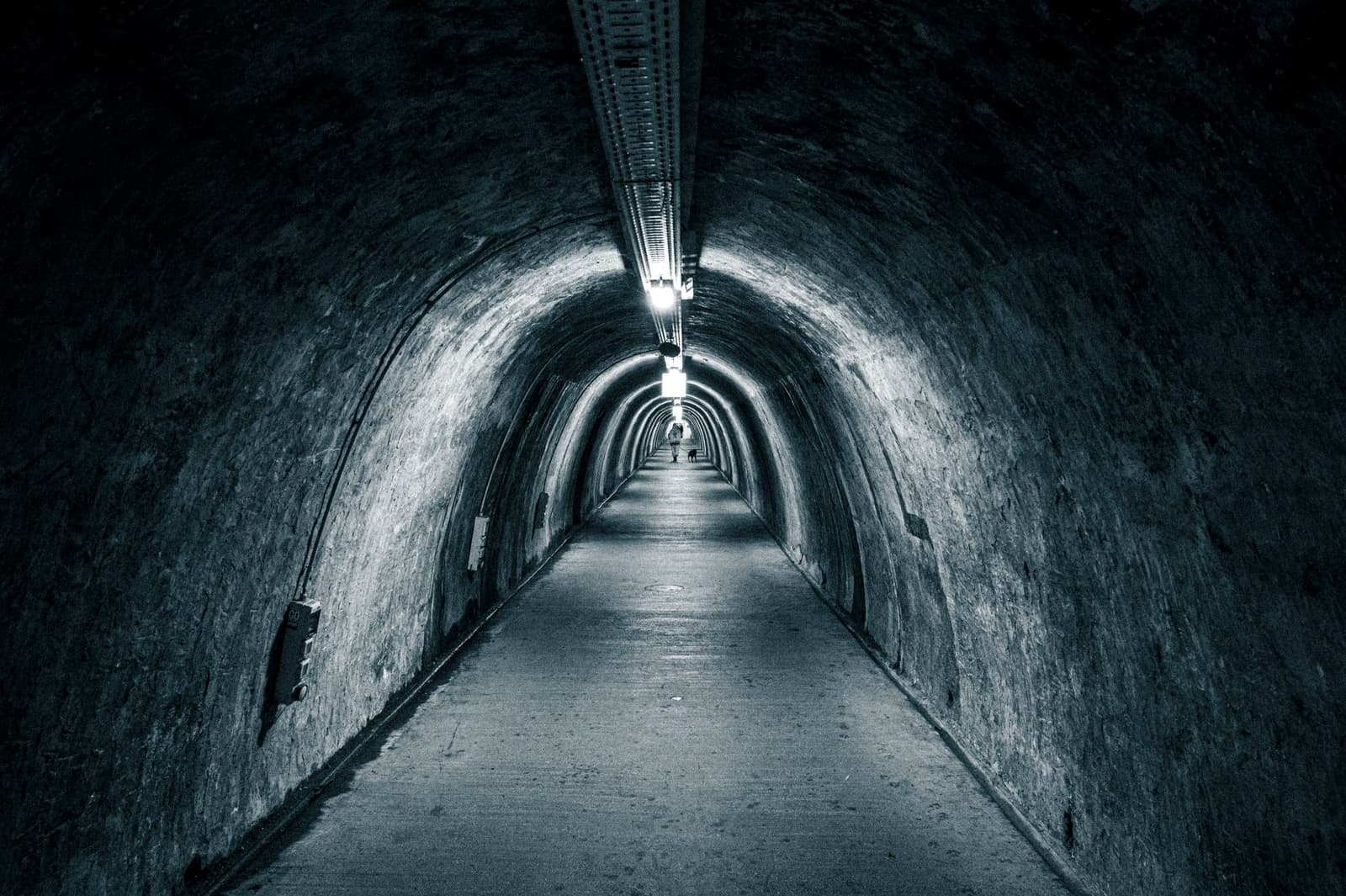
An underground mine reaches the ore through a shaft, a sloping ramp (often called a decline) or a horizontal tunnel from a hillside. From there, a network of tunnels is driven to and through the orebody. This tunnelling is called development, and much of it has to be done before steady production starts.
Ore is then extracted from openings called stopes. Common methods include:
- Longhole or sublevel stoping, where large blocks of ore are drilled and blasted between levels.
- Cut and fill, where ore is taken in slices and the void is backfilled with waste rock or a cemented paste made from tailings.
- Room and pillar, used in flatter deposits, where pillars of rock are left to hold up the roof.
- Block caving, a bulk method for very large orebodies, where the ore is undercut and allowed to break and fall under its own weight.
Underground mining moves far less waste rock than an open pit, but each tonne usually costs more to mine. Ventilation, ground support, dewatering and the development itself all add cost. As a result, most underground mines need higher grades than an open pit would, unless the orebody is large enough for a bulk method.
How the Choice Changes the Numbers
Cost structure. An open pit usually has a low mining cost per tonne but moves many tonnes, including waste. Before the first ore is reached, there may be a large pre-stripping program. An underground mine has a higher cost per tonne but moves fewer tonnes, and it carries a large upfront development cost. A study will show both the capital cost to build and the operating cost per tonne.
Grade needed. Because underground tonnes cost more, the cut-off grade, the lowest grade worth sending to the mill, is usually higher underground. A deposit with modest grade spread over a wide area may only work as a pit. A narrow, high-grade vein may only work underground.
Dilution. No mining method extracts ore perfectly. Some waste rock is always mixed in with the ore, which lowers the grade that reaches the plant. In a pit, dilution comes from blasting and from mining the edges of ore zones with large equipment. Underground, it comes mainly from blasting beyond the planned stope walls. Narrow orebodies are especially sensitive, because even a small amount of overbreak is a large share of the ore mined.
Ore recovery. Some ore is also left behind. Underground, pillars left for support and ore that cannot be safely reached both reduce recovery. In a pit, ore at the edges or below the final pit floor may be left. Mining recovery is a separate idea from metallurgical recovery, which measures how much metal the plant extracts from the ore it receives.
Form 43-101F1, the required format for technical reports in Canada, asks the mining methods section to address production rates, mine life, mining unit dimensions, mining dilution factors, requirements for stripping, underground development and backfilling, and the mining fleet required. Each of those inputs flows into the cost and revenue estimates.
Footprint and Permitting
An open pit disturbs a large area. The pit itself, the waste rock dumps and the haul roads all take up ground, and the pit remains at closure. An underground mine has a smaller surface footprint, mainly the portal or shaft, the plant and the tailings facility. Some underground methods, block caving in particular, can cause the ground above to subside.
Both kinds of mine produce tailings if they process ore on site, and both need water management and closure plans. The size and nature of the footprint affects the permitting path, the community conversation and the closure cost.
Combined Plans
Many projects use both methods. A common plan mines the near-surface part of a deposit as an open pit, then continues at depth from underground once the strip ratio makes the pit too costly to extend. Others run both at once on different zones. Combined plans add complexity, because the study has to show when the switch happens and what it costs.
What to Check
When a company describes its planned mining method, look for:
- The study stage. A mining method in a preliminary economic assessment is a first pass. Under NI 43-101, a PEA that includes inferred resources has to say that there is no certainty it will be realized.
- Depth and shape of the deposit. Does the method fit how deep, wide and continuous the mineralization is?
- Strip ratio or development metres. How much waste or tunnelling the plan needs per tonne of ore.
- Dilution and mining recovery. The percentages assumed and how they compare with the deposit's geometry, especially for narrow zones.
- The cut-off grade. Whether it reflects the cost of the chosen method.
- The footprint. Where waste and tailings go and what closure involves.
All of these are in the mining methods section of the technical report, filed on SEDAR+. Compare the assumptions, not just the headline economics, and speak to your own adviser before making any investment decision.
Frequently asked questions
- Form 43-101F1 Technical Report, Canadian Securities Administrators (via Alberta Securities Commission), 2011-06-30. Date is the form's effective date
- National Instrument 43-101 Standards of Disclosure for Mineral Projects, consolidation effective June 9, 2023, Canadian Securities Administrators (via Alberta Securities Commission), 2023-06-09
This article is published by Bellmare Capital, a brand operated by Apollo Shareholder Relations, for information and education only. It is not investment advice, a recommendation, or an offer or solicitation to buy or sell any security. Bellmare Capital is not a registered investment adviser or dealer, and this is not independent research.
Apollo Shareholder Relations provides paid investor relations, marketing and communications services to public companies, including companies in the sectors Bellmare Capital writes about, and may be compensated in cash or securities. Apollo, its principals, employees and contractors may hold securities of companies discussed and may buy or sell them at any time. Where an article covers a company that pays Apollo, it is labelled Sponsored at the top with the compensation and holdings.
Information comes from public filings and other sources believed to be reliable, but its accuracy and completeness are not guaranteed, and it may be out of date. Small cap and junior resource companies are speculative and volatile, and investors can lose their entire investment. Bellmare Capital and Apollo Shareholder Relations accept no liability for any loss arising from use of this content. Read each company's own filings on SEDAR+ and consult a registered adviser before acting.
Get the next one by email.