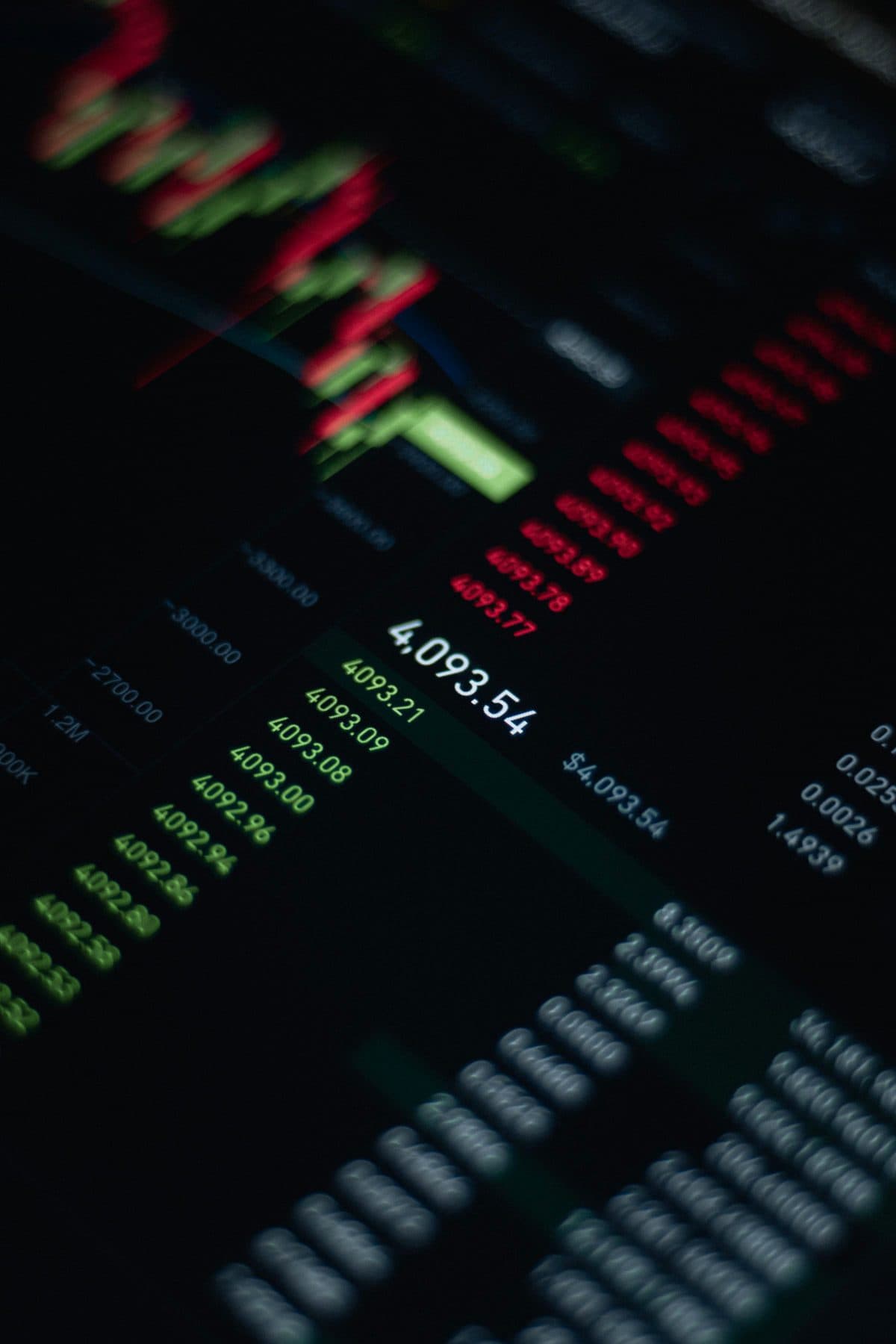
- The bid is the best price a buyer is offering; the ask is the best price a seller will accept. The spread is the gap between them.
- In thinly traded stocks the spread can be a large share of the price, and few shares may be available at each level, so a single order can move the price.
- A market order fills at the best available prices, which may be worse than the last trade. A limit order sets a price but may not fill.
Introduction
When a share price is quoted in the news or on a website, it is usually the last trade. But nobody can buy or sell at the last trade. At any moment there are two live prices: what buyers are willing to pay and what sellers are willing to accept. For large, heavily traded stocks the two are almost the same. For many small cap stocks on the TSXV and CSE, they can be far apart.
This guide explains how those prices work and why liquidity matters in small caps. It describes mechanics only and is not trading advice. All examples are hypothetical.
The price you see is the last trade. The price you get depends on who is waiting on the other side.
Bid, Ask and Spread
- The bid is the highest price a buyer has offered to pay.
- The ask (or offer) is the lowest price a seller has offered to accept.
- The spread is the difference between them.
Suppose a stock shows a bid of $0.20 and an ask of $0.22. The spread is two cents. Someone who bought at the ask and immediately sold at the bid would lose two cents a share, about 9% of the purchase price, before commissions. That round-trip cost is the simplest way to see what a spread means.
The same two-cent spread on a $20 stock would be a tenth of a percent. That is why spreads are best compared as a percentage of the price, not in cents.
The Order Book
The bid and ask are only the top of a queue. Behind them sits the order book: all the buy orders at lower prices and all the sell orders at higher prices, each with a number of shares.
Here is a hypothetical order book for a thinly traded junior:
| Bid size | Bid | Ask | Ask size |
|---|---|---|---|
| 40,000 | $0.20 | $0.22 | 15,000 |
| 25,000 | $0.19 | $0.24 | 10,000 |
| 60,000 | $0.18 | $0.25 | 30,000 |
| 10,000 | $0.16 | $0.28 | 20,000 |
Depth is how many shares are available near the best prices. In this example only 15,000 shares are offered at $0.22. Anyone wanting more has to reach into higher prices.
A deep book has many shares at each level and small gaps between levels. A shallow book has few shares and large gaps. Small cap stocks often have shallow books.
Market Orders and Limit Orders
The SEC's investor bulletin on order types describes the two basic kinds:
- A market order is an order to buy or sell at the best available price. It generally executes right away, but the price it fills at can differ from the price quoted a moment before.
- A limit order is an order to buy or sell at a specific price or better. It only executes at the limit price or a better one, so it may not fill at all.
The difference matters in a shallow book. Using the table above, a market order to buy 40,000 shares would take the 15,000 at $0.22, the 10,000 at $0.24 and 15,000 of the 30,000 at $0.25. The average cost would be about $0.236, and the last trade would print at $0.25, about 14% above the $0.22 ask before the order. The SEC bulletin makes the same point in general terms: parts of a large market order may execute at different prices because of limited liquidity.
A limit order at $0.22 for the same 40,000 shares would buy only the 15,000 available at that price and wait for sellers for the rest. It controls the price but gives up certainty of a fill.
Why Thin Stocks Move on Small Orders
In the example, one order of 40,000 shares, about $9,450, moved the last trade from $0.22 to $0.25. Nothing about the company changed. The order simply used up the shares offered at the lower prices.
The same works in reverse. A seller with a market order in a shallow book can push the last trade sharply lower. This is why:
- Price charts of illiquid stocks can look volatile even on days with very little volume.
- The last trade can be stale. If a stock has not traded for hours, the last price may not reflect the current bid and ask.
- Large holders affect the market. When an early investor, a fund or a flow-through buyer sells a block, it may take days for the book to absorb it. A separate guide covers what share issuance and dilution mean for the share count.
- Moves on small volume can be misleading. A sharp move on a few thousand shares says less than the same move on heavy trading.
Liquidity Changes Over Time
Liquidity is not fixed. A junior's trading can be heavy around significant news and very light in between. Spreads tend to narrow when more people are trading and widen when fewer are. Market-wide conditions also matter: in quiet markets, small cap order books often thin out.
Liquidity also decides how easily a position can be sold close to the quoted price. A holding that is small next to a stock's normal daily volume can usually be sold without moving the price much. A holding that equals several days of normal volume may take time to sell, or may only sell at lower prices. That difference is part of the risk of owning thinly traded shares, separate from anything about the company itself.
This is one reason to read the news behind a move. Our guide to reading a junior mining news release explains what to look for, and the news release reader helps work through one.
What to Look At
- The spread as a percentage of price, not just in cents.
- Depth at the best bid and ask, and how far apart the next levels are.
- Average daily volume over a period, not a single day.
- When the last trade happened, and whether the quoted price is current.
- The size of any position relative to normal volume, since a large position can take time to build or exit.
Exchange listing rules, including the differences between the TSX, TSXV and CSE, are covered in our exchange guide. This guide is general information; for how to place orders, speak to your broker or adviser.
Frequently asked questions
Investor Bulletin: Understanding Order Types, U.S. Securities and Exchange Commission, Office of Investor Education and Advocacy (Investor.gov), 2026-08-18. First published July 12, 2017; date shown is the last update
This article is published by Bellmare Capital, a brand operated by Apollo Shareholder Relations, for information and education only. It is not investment advice, a recommendation, or an offer or solicitation to buy or sell any security. Bellmare Capital is not a registered investment adviser or dealer, and this is not independent research.
Apollo Shareholder Relations provides paid investor relations, marketing and communications services to public companies, including companies in the sectors Bellmare Capital writes about, and may be compensated in cash or securities. Apollo, its principals, employees and contractors may hold securities of companies discussed and may buy or sell them at any time. Where an article covers a company that pays Apollo, it is labelled Sponsored at the top with the compensation and holdings.
Information comes from public filings and other sources believed to be reliable, but its accuracy and completeness are not guaranteed, and it may be out of date. Small cap and junior resource companies are speculative and volatile, and investors can lose their entire investment. Bellmare Capital and Apollo Shareholder Relations accept no liability for any loss arising from use of this content. Read each company's own filings on SEDAR+ and consult a registered adviser before acting.
Get the next one by email.