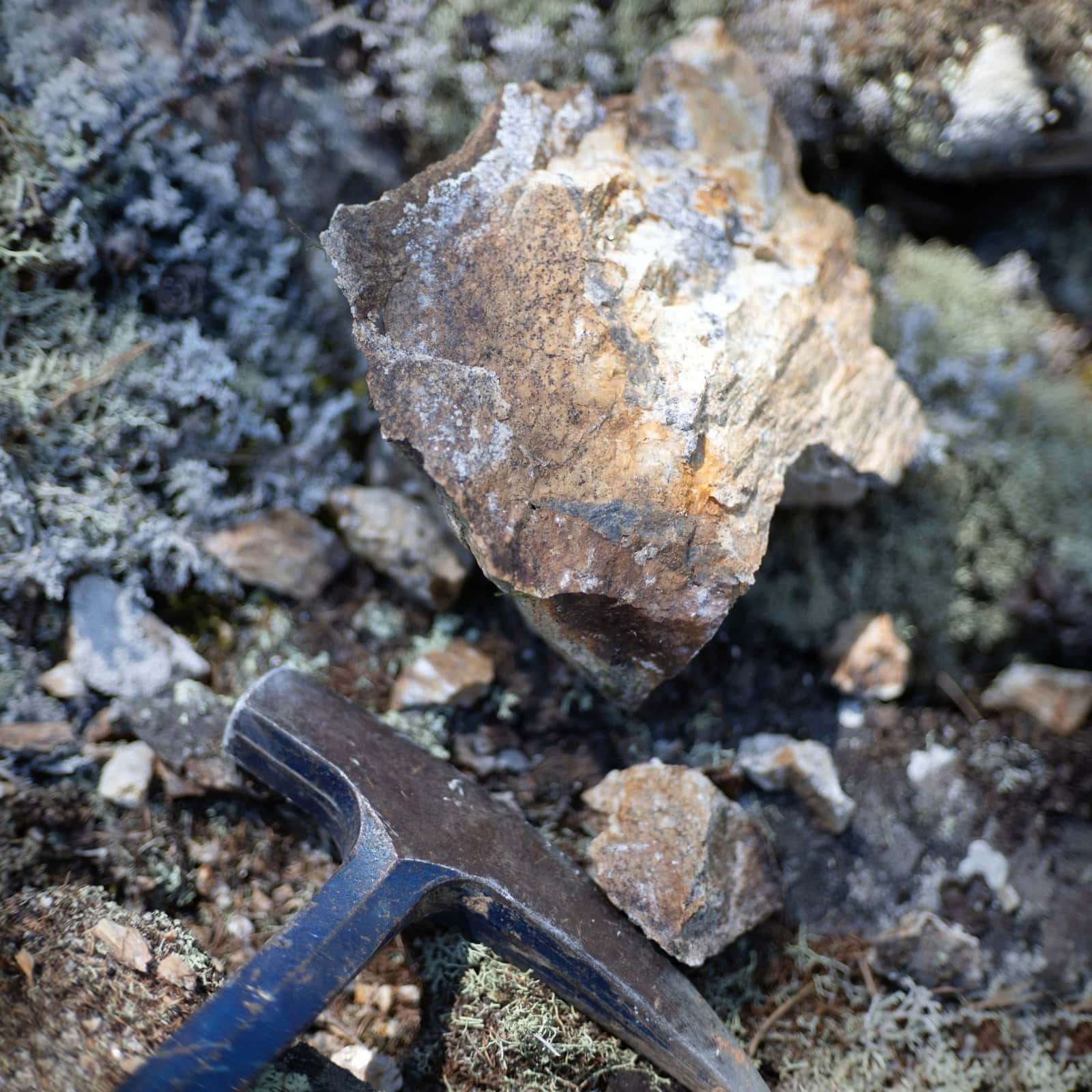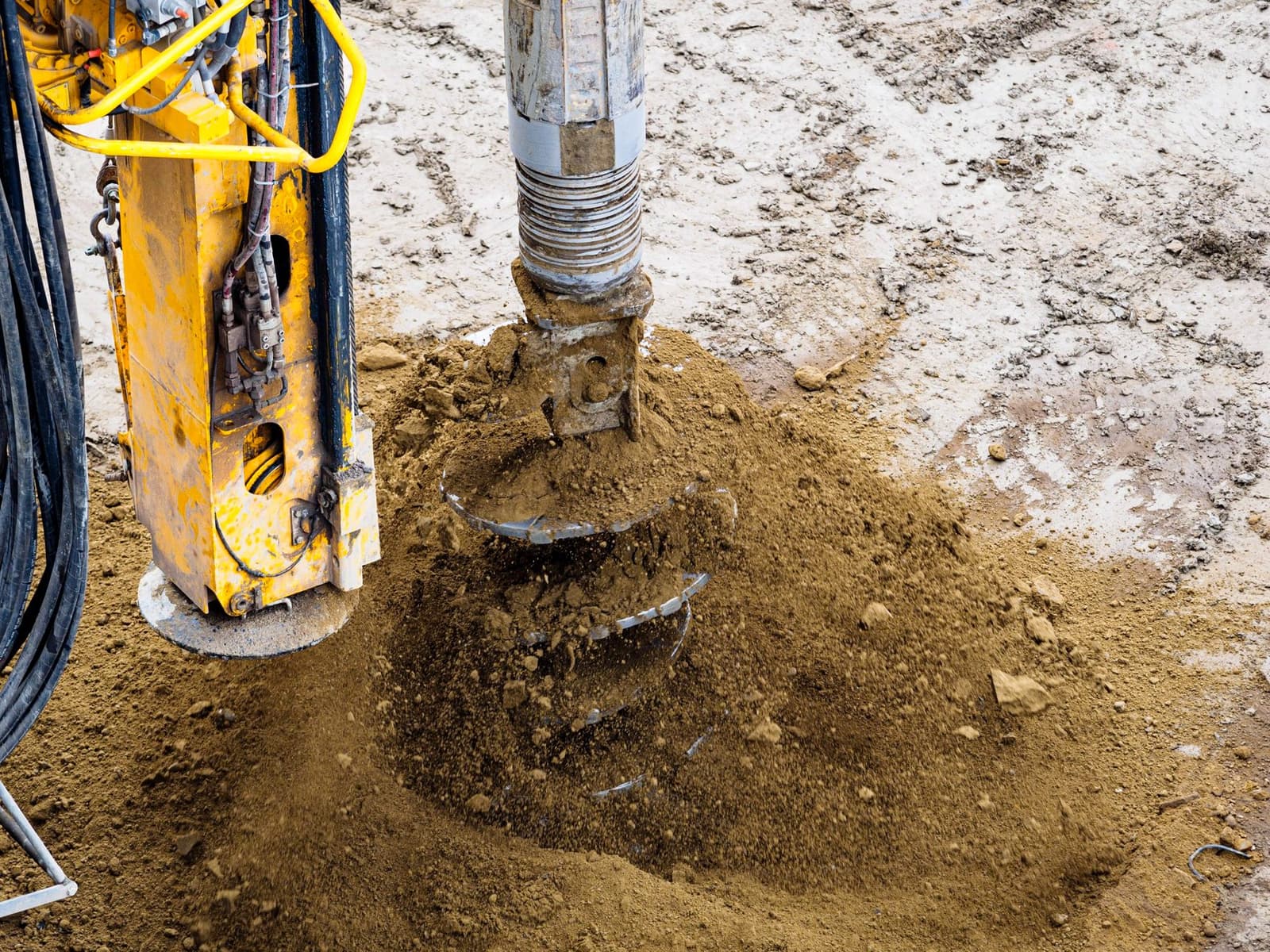
- Diamond drilling cuts a solid cylinder of rock called core. Reverse circulation (RC) drilling breaks the rock into chips that air carries to surface.
- RC is generally quicker and cheaper per metre. Core costs more but preserves the rock's structure, which geologists need to understand a deposit.
- A good release says which method produced each result, and a technical report has to describe the drilling and anything that could affect the reliability of the samples.
Introduction
Almost every junior mining story turns on drill results. A geologist can map, sample and survey a property for years, but the only way to see what sits hundreds of metres underground is to drill a hole and bring the rock to surface.
Exploration companies mostly use two methods to do that: diamond drilling and reverse circulation (RC) drilling. They produce very different samples. Knowing which one generated a result helps you understand what the company can and cannot say about it.
Core shows you the rock. Chips tell you what was in it. Both are useful, but they are not the same evidence.
How Diamond Drilling Works
A diamond drill uses a circular bit set with industrial diamonds. As it turns, it cuts a ring through the rock and leaves a solid cylinder in the middle, which rises into the hollow drill rods. That cylinder is the drill core. Natural Resources Canada describes it as looking like a solid rod of rock, generally about four to five centimetres across, and notes that a diamond drill can cut through rock for a kilometre or more.
The core comes to surface in sections, is laid in trays in order, and is logged by a geologist. Samples of the core are then sent to a laboratory to be analyzed for their mineral content.
What makes core valuable is that the rock stays intact. A geologist can see:
- the rock types and how they change down the hole;
- veins, faults and fractures, and the angle they cross the core;
- where the minerals sit and how they are distributed.
That structural information is what lets a company work out the shape and orientation of a mineralized zone. It is also why core supports true width estimates better than chips can.
How RC Drilling Works
RC drilling uses a hammer or bit that breaks the rock into small fragments. It runs on double-walled rods. Compressed air goes down the space between the outer and inner walls, and the rock chips are carried back up through the inner tube. ASTM's standard guide on the method describes this as the circulating fluid travelling down the annular space and carrying the rock particles to surface through the inner pipe, which allows continuous sampling of cuttings while drilling.
At surface the chips are collected interval by interval, and a split of each interval is bagged for the lab.
The trade-off is plain. RC is generally faster and cheaper per metre than core drilling, so a company can drill more holes for the same budget. But the rock arrives as chips, so the structure is gone. A geologist can still identify rock types and minerals in the chips, but cannot see the angle of a vein or the shape of a fault.
Cost, Speed and Sample Quality
Costs vary widely with location, rock type, hole size and depth, so there is no fixed price per metre for either method. The direction of the difference is consistent: core costs more. Australian Bureau of Statistics data published in 2002, for example, showed diamond drilling taking a larger share of drilling spending than of metres drilled, the reverse of RC.
Sample quality is the other side of the ledger. Things that can affect RC samples include:
- Recovery. If some of the material from an interval is lost, the sample may not represent the rock.
- Contamination. Material from one part of the hole can mix with another interval's sample.
- Ground conditions. Highly fractured or porous rock, and ground that has been mined before, can make both problems worse.
Core has its own recovery issue. In broken or soft ground, some of the core can be lost, and low core recovery in a mineralized interval deserves a question.
A study presented at an Australasian Institute of Mining and Metallurgy conference in 1996 illustrates the point: in twinned holes on one gold deposit, the core hole returned many more gold intersections than the RC hole beside it, and the authors proposed checks on RC sample recovery and cross-contamination. That is one deposit, not a general rule, but it shows why companies compare methods.
Because the two sample types behave differently, the CIM Estimation of Mineral Resources and Mineral Reserves Best Practice Guidelines say samples collected by different methods, such as RC holes and diamond holes, should be distinguished in the database, with an explanation of how the data sets are combined.
When Each Method Is Used
Typical patterns, though no rule is fixed:
- Early testing of shallow targets. RC can test a geochemical or geophysical anomaly quickly and cheaply.
- Understanding the geology. Core is used when the company needs to see structure, contacts and textures, which is common for vein-hosted deposits.
- Deeper holes. Natural Resources Canada notes a diamond drill can cut through rock for a kilometre or more. Some programs drill the upper part of a hole with a cheaper method and finish it with core.
- Resource drilling. Infill drilling for a resource estimate may use either method, or both, depending on the deposit and on how the two compare.
- Checking the method. A core hole drilled beside an RC hole lets the company compare results and test whether RC is reliable for that deposit.
What the Rules Ask For
In Canada, scientific and technical disclosure about mineral projects falls under National Instrument 43-101. The technical report form, Form 43-101F1, requires a drilling section that describes the type and extent of drilling and any drilling, sampling or recovery factors that could materially affect the accuracy and reliability of the results. For properties that are not yet advanced, it also asks for the location, azimuth and dip of drill holes and the relationship between sample length and true thickness, if known.
A separate section covers sample preparation, analysis and security. That is where you find out how samples were split, which lab analyzed them, and what quality control samples were inserted. For more on that and on reading intercepts, see the news release reader.
What to Look For in a Release
- The method for each hole. A table that mixes RC and core results should say which is which.
- Recovery. Some releases report core recovery or RC sample recovery. Poor recovery in the best interval is worth noting.
- Hole angle and true width. Core can support a true width estimate. An RC result usually cannot say as much about orientation.
- Twin holes. If the company has compared RC and core, look at how close the results were.
- The technical report. For anything that matters to your decision, read the drilling and sampling sections of the filed report on SEDAR+, and speak to your own adviser.
Neither method is a mark of quality on its own. A well-run RC program can produce reliable data, and a poorly run core program can produce poor data. What matters is whether the method fits the deposit and whether the company tells you enough to judge it.
Frequently asked questions
- Exploration and Mining Guide for Aboriginal Communities, Natural Resources Canada, 2013-04-03. Published 2013 with industry and federal partners; date is the catalogue record date
- ASTM D5781/D5781M-18, Standard Guide for Use of Dual-Wall Reverse-Circulation Drilling for Geoenvironmental Exploration and the Installation of Subsurface Water Quality Monitoring Devices, ASTM International, 2025-03-04. 2018 edition; date is the listing's last update
- Form 43-101F1 Technical Report (unofficial consolidation), Ontario Securities Commission, 2011-06-30
- CIM Estimation of Mineral Resources and Mineral Reserves Best Practice Guidelines, Canadian Institute of Mining, Metallurgy and Petroleum, 2019-11-29
- Diamond Drill Core Versus RC Chips: The Real Sample, Chapter 2, Australasian Institute of Mining and Metallurgy (Third International Mining Geology Conference), 1996-01-01. Conference paper published 1996; no day given
- Year Book Australia, 2002: Mineral exploration, Australian Bureau of Statistics, 2002-01-25
This article is published by Bellmare Capital, a brand operated by Apollo Shareholder Relations, for information and education only. It is not investment advice, a recommendation, or an offer or solicitation to buy or sell any security. Bellmare Capital is not a registered investment adviser or dealer, and this is not independent research.
Apollo Shareholder Relations provides paid investor relations, marketing and communications services to public companies, including companies in the sectors Bellmare Capital writes about, and may be compensated in cash or securities. Apollo, its principals, employees and contractors may hold securities of companies discussed and may buy or sell them at any time. Where an article covers a company that pays Apollo, it is labelled Sponsored at the top with the compensation and holdings.
Information comes from public filings and other sources believed to be reliable, but its accuracy and completeness are not guaranteed, and it may be out of date. Small cap and junior resource companies are speculative and volatile, and investors can lose their entire investment. Bellmare Capital and Apollo Shareholder Relations accept no liability for any loss arising from use of this content. Read each company's own filings on SEDAR+ and consult a registered adviser before acting.
Get the next one by email.