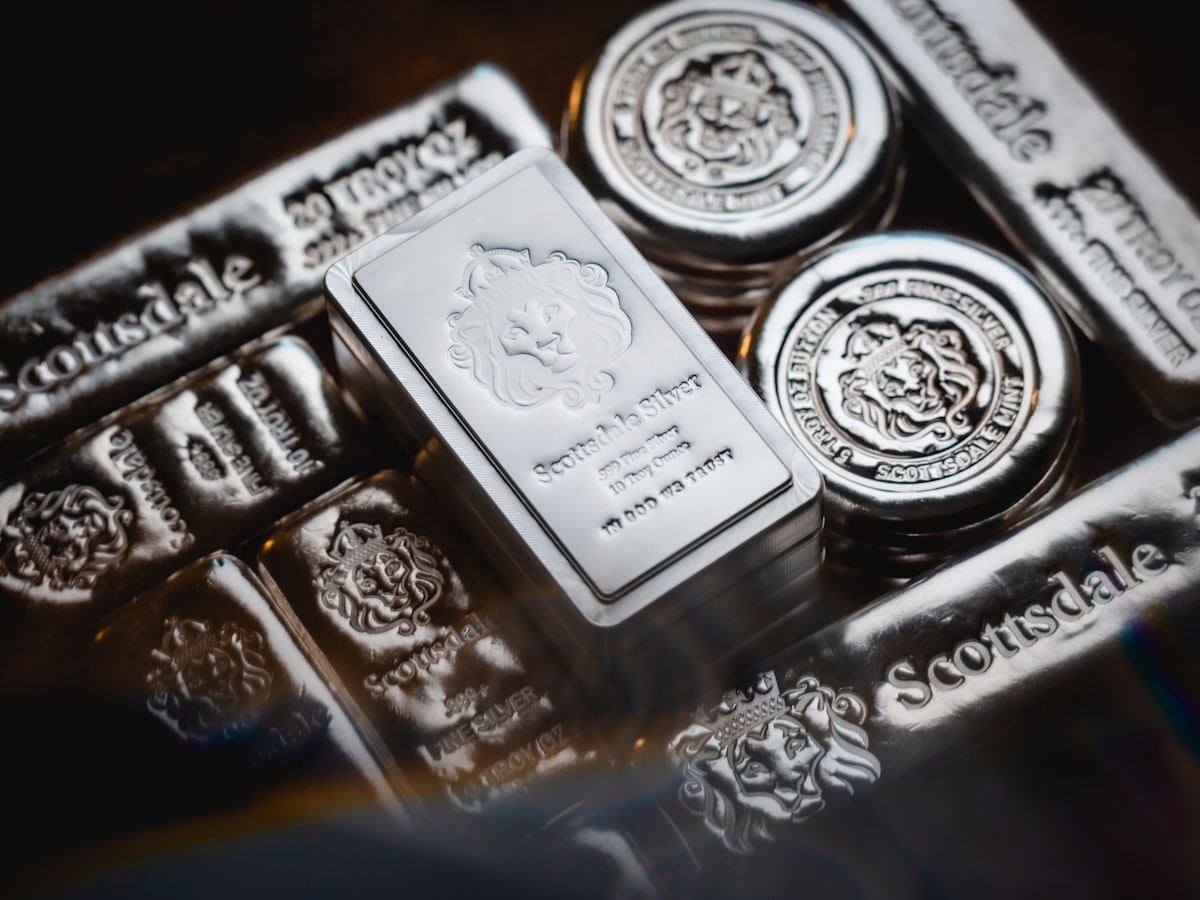
- Silver is roughly half industrial demand and half investment plus jewellery demand.
- Industrial uses include solar panels, electronics, and electric vehicle wiring.
- Because it has both monetary and industrial drivers, silver tends to be more volatile than gold.
Why silver is called an industrial-monetary hybrid
Silver functions partly as a precious metal (driven by investment and jewellery demand) and partly as an industrial metal (driven by photovoltaic, electronics, and other technology use). This dual nature is why silver moves with gold during macro stress but also responds to industrial cycles.
Industrial demand drivers
Photovoltaic (solar panel) demand has become one of the largest single industrial uses of silver. Electronics manufacturing, brazing alloys, electric vehicle wiring, and pharmaceutical antimicrobials are other meaningful industrial demand sources.
Investment and jewellery demand
Silver coins, bars, and exchange-traded products absorb investment demand. India and the US are large markets for retail silver bullion. Jewellery and silverware demand remain substantial in India and parts of Southeast Asia.
Supply structure
Roughly two-thirds of mine supply of silver is a byproduct of base metal mining (lead, zinc, copper) rather than primary silver mines. This means silver supply is relatively price-inelastic in the short run: a higher silver price does not directly trigger more lead-zinc-copper production.
Why silver is more volatile than gold
The market for silver is much smaller than gold in dollar terms. Add the swing factor of industrial demand and the byproduct supply dynamic, and silver tends to move further than gold in both directions during macro and industrial cycles.
| Use category | Share of annual demand |
|---|---|
| Industrial (electronics, photovoltaics, alloys) | Approximately 50 to 55 percent |
| Investment (coins, bars, ETPs) | Approximately 15 to 25 percent |
| Jewellery and silverware | Approximately 20 to 25 percent |
| Photography and other | Single digits |
Frequently asked questions
Demand splits and supply structure are widely documented by the Silver Institute and similar industry bodies.